
Executive Summary: 2026 Key Findings
For journalists, marketers, and operators, here are the core data points defining the 2026 digital coupon economy:
- Near-Universal Adoption: Between 85% and 91% of shoppers across mature markets now actively redeem online coupons[1][2].
- The Deal-Breaker: 57% of online shoppers admit they would have abandoned their checkout if they hadn't found a discount code[3].
- The Digital Multiplier: Digital coupons now generate redemption rates up to 10× higher than traditional paper alternatives[4].
- Mobile-First Discovery: Over 70% of consumers actively search for coupons on their smartphones before completing a purchase[5].
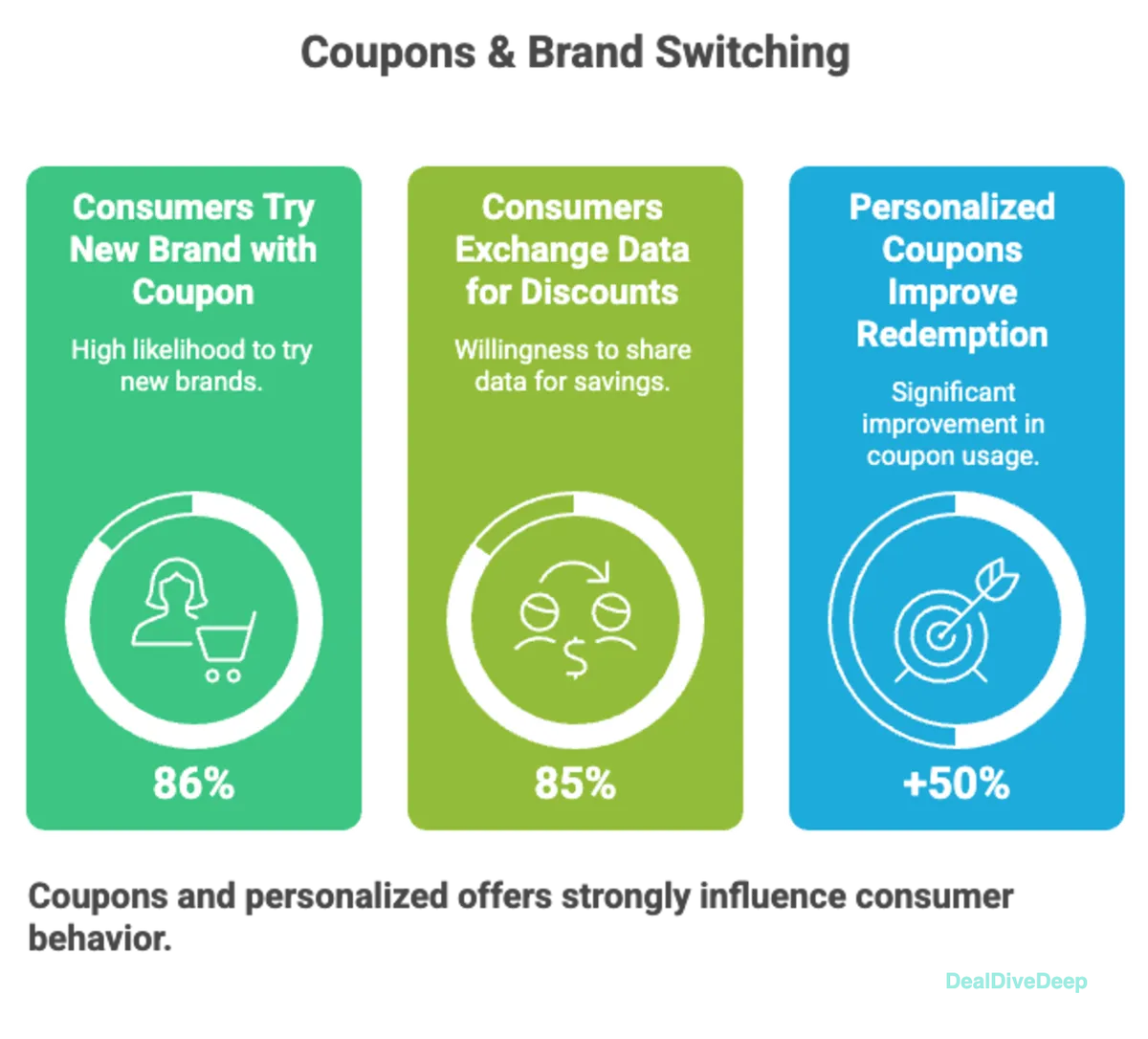
- The Switching Mechanism: 86% of online shoppers are more likely to try a completely new brand if incentivized by a first-order coupon[6].
- The Data Exchange: 85% of consumers are willing to trade personal data (emails, browsing behavior) in exchange for personalized discounts[7].
Coupons have outgrown their reputation as checkout sweeteners. In 2026, they function less like incentives and more like infrastructure.
What was once a tactical discount layer has become embedded inside acquisition engines, CRM systems, retention flows, and cross-border marketplaces. Digital coupon redemptions surpassed 700 million globally in 2025, and usage now touches nearly nine out of ten online shoppers[1][2].
The numbers themselves are significant, but the structural transformation behind them is even more important. This report explores how coupon behavior evolved from optional savings into a systemic feature of modern commerce—and what that evolution means for operators, marketers, affiliate publishers, and investors navigating digital retail growth in 2026.
Introduction: When Discounts Became Default
Not long ago, coupons felt seasonal—appearing primarily during major retail events such as Black Friday, holiday promotions, or end-of-season inventory clearances. Promotional emails with discount codes were typically the final push to convert hesitant shoppers.
That era is over.
Between 2022 and 2026, inflation hardened consumer spending habits while digital infrastructure removed nearly every friction point associated with deal discovery. Smartphones became constant companions in purchase journeys. Browser extensions automate coupon testing at checkout. Loyalty apps transformed discounts into daily engagement mechanisms[5].
The result is not simply higher coupon usage. It is behavioral normalization.
In 2026, most online shoppers do not ask whether a discount exists. They assume one does. They search for it before paying. They compare retailers based on it. They abandon carts when they are absent [3]. Coupons now sit inside the architecture of the buying decision.
They influence first purchases. They rescue abandoned checkouts. They encourage higher basket values. They incentivize brand switching [6]. They fuel email signups and data exchange. And increasingly, they serve as signals of value legitimacy in crowded digital markets.
The question is no longer whether coupons work.
The question is how deeply they are integrated into the commercial model.
To understand that shift, we begin with scale
The Scale of Adoption: From Common to Near-Universal
Coupon usage has crossed the threshold from widespread marketing tactic to structural consumer behavior.
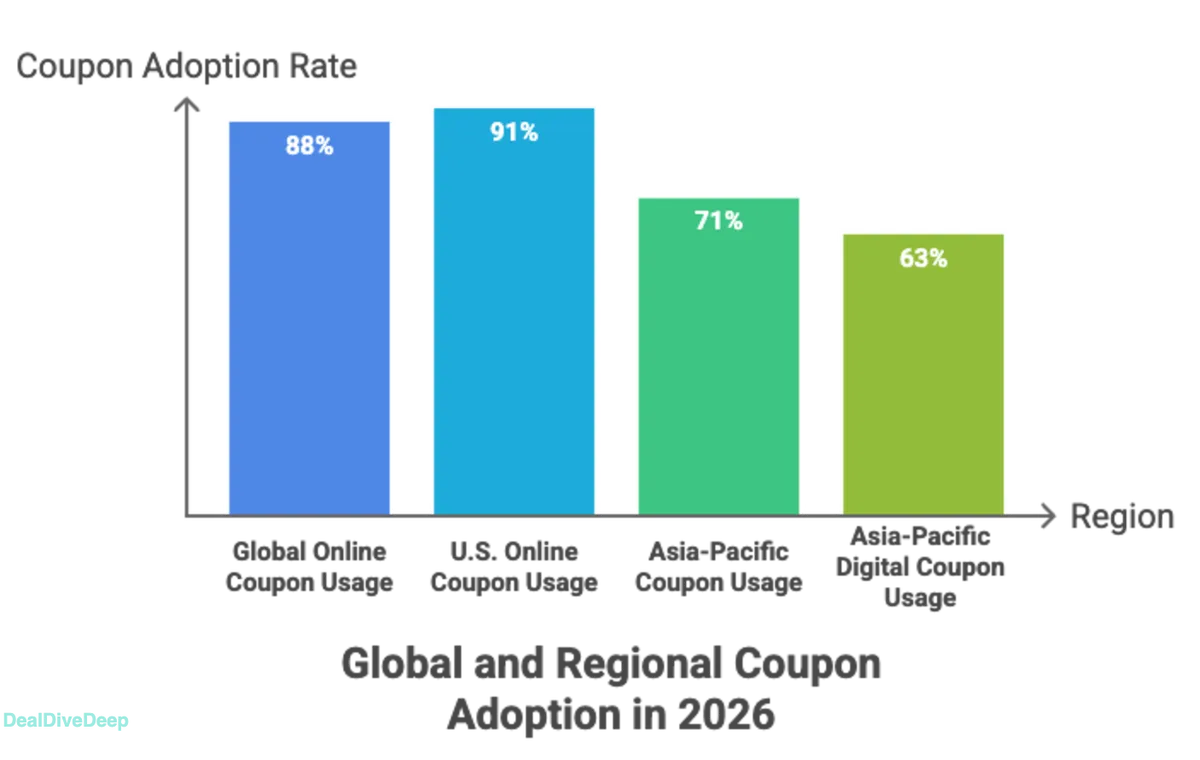
Across mature online markets, between 85% and 91% of shoppers report using coupons or discount codes when making purchases online [3][4]. In the United States, coupon usage approaches 91% penetration [5][6], reflecting near-universal participation in digital discounting. In Asia-Pacific markets, approximately 71% of online buyers use coupons, with about 63% relying specifically on digital or scannable e-coupon formats.
This level of adoption signals something deeper than price sensitivity. It reflects optimization behavior. Consumers are not necessarily spending less; they are spending more strategically.
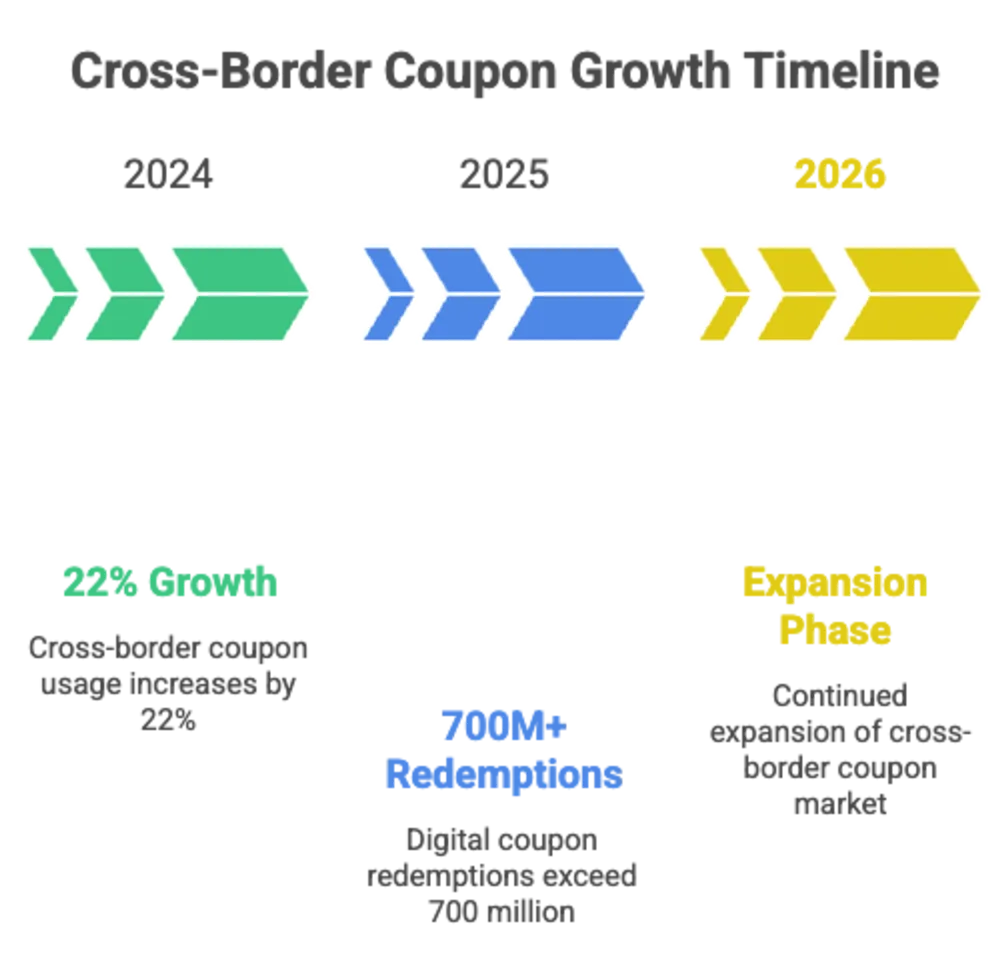
Redemption volume reinforces this trend. In 2025 alone, more than 700 million digital coupons were redeemed globally, reflecting sustained growth in coupon-driven commerce. Several major markets recorded more than 13% year-over-year growth in coupon usage during 2024, suggesting continued expansion through 2026.
Cross-border behavior adds another dimension. International coupon usage rose by approximately 22% in 2024, particularly in digitally mature trade hubs such as Singapore, the UAE, and Hong Kong.
Coupons have moved from peripheral savings tools to global purchasing accelerants.
Mobile as the Decision Engine
If digital coupons represent a structural advantage, mobile devices represent the operating system through which that advantage is realized.
More than 70% of consumers search for coupons on smartphones before completing purchases [3][7], highlighting the central role of mobile devices in modern shopping behavior. In the United States, approximately 68% of coupon code usage occurs through mobile apps and browser extensions [3], many of which automatically test and apply codes at checkout.
Mobile behavior is particularly visible in grocery retail. Around 61% of consumers use savings applications while shopping for groceries [8], and among shoppers aged 25–40, savings-app usage rises to nearly 80% [8].
These trends reveal how the coupon has shifted from a passive promotional offer to an active stage in the buying process. The purchase journey increasingly follows a predictable sequence:
Discovery → Comparison → Coupon Search → Checkout
If a discount is not found, the transaction may pause. When a coupon is applied seamlessly, conversion accelerates.
Retailers are therefore no longer competing solely on product assortment or base price—they are competing on promotional accessibility.
In 2026, the smartphone is not simply a sales channel. It is a discount discovery engine.

Strategic Implication
Taken together, the evidence reveals a structural reality. Coupon usage is nearly universal. Redemption volume is massive and growing. Digital formats outperform paper decisively [5]. Mobile embeds discount discovery directly into purchase flows. Coupons are no longer temporary promotional spikes.
They are permanent components of growth architecture. In the next section, we move from scale to behavior — examining how coupons reshape conversion rates, basket size, brand loyalty, and industry competition across grocery, fashion, food delivery, beauty, and electronics.
"Scale explains why coupons matter. Behavior explains how they drive revenue"
Behavioral Economics & Industry Power Plays
In 2026, coupons are not just cost reductions. They are psychological triggers embedded in digital commerce. They alter decision thresholds, reshape basket construction, influence brand switching, and drive lifecycle engagement.
To understand their revenue impact, we need to examine how they affect buying behavior — and how different industries weaponize them differently.
Coupons as Behavioral Triggers
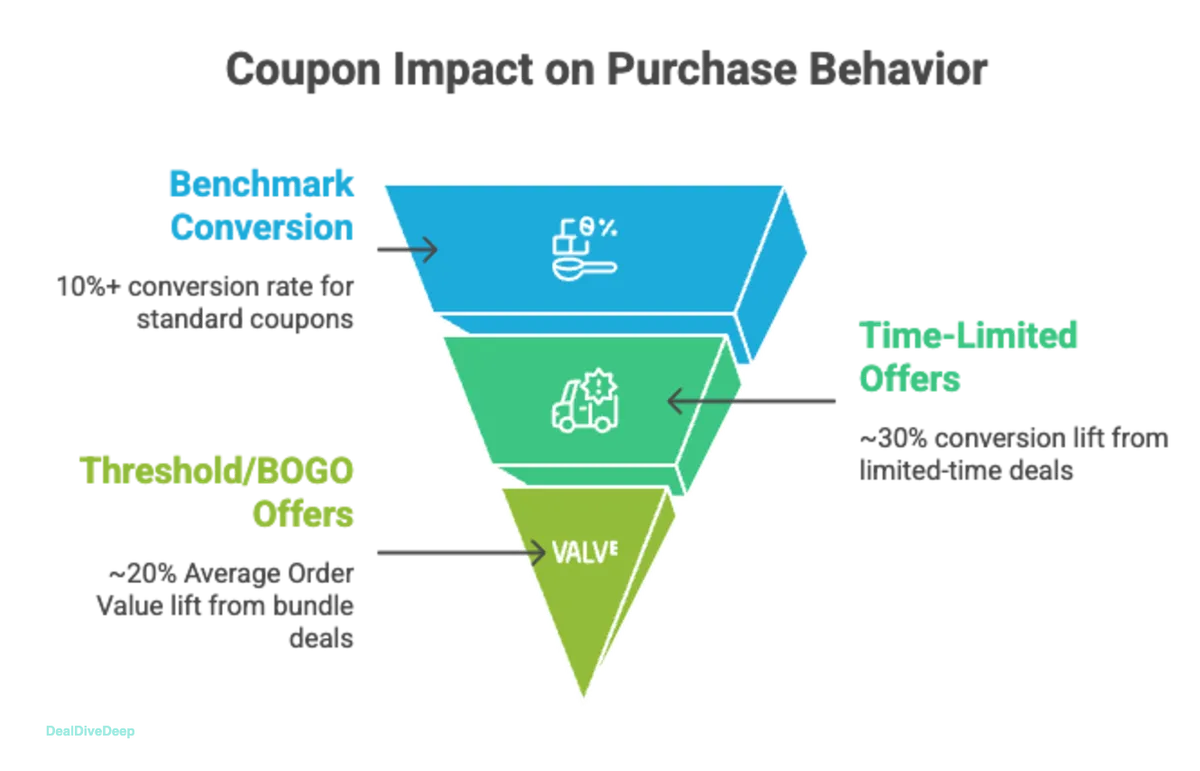
The most important statistic in the coupon economy is not adoption. It is a dependency. Research shows that approximately 57% of online shoppers who use a coupon say they would not have completed the purchase without it [9]. That means in more than half of coupon-driven transactions, the discount is not incremental — it is decisive. This is where coupons move from marketing to architecture. They don’t merely enhance intent; they create it. At the same time, structured coupon campaigns regularly achieve conversion rates exceeding 10%, with time-limited offers generating around 30% conversion lift compared to non-urgent promotions [10]. Urgency works, Scarcity works. And discount framing works.
Even basket composition shifts. Threshold-based offers such as “10% off orders over €50” or BOGO structures can increase average order value by roughly 20% [11], as shoppers optimize carts to maximize perceived savings.
Coupons influence:
- Whether someone buys.
- How much do they spend?
- When they buy.
- Which brand do they choose?
Brand Trial & Competitive Switching
Coupons are not just closing tools. They are switching mechanisms. In 2026, approximately 86% of online shoppers say they are more likely to try a new brand if it offers a coupon [4][12]. That single figure explains why emerging brands lean heavily on first-order discounts. A well-timed offer lowers the psychological barrier to experimentation.
The implications are significant:
- New entrants use coupons to penetrate crowded categories.
- Established brands use them defensively to prevent churn.
- Marketplaces use them to shift traffic share.
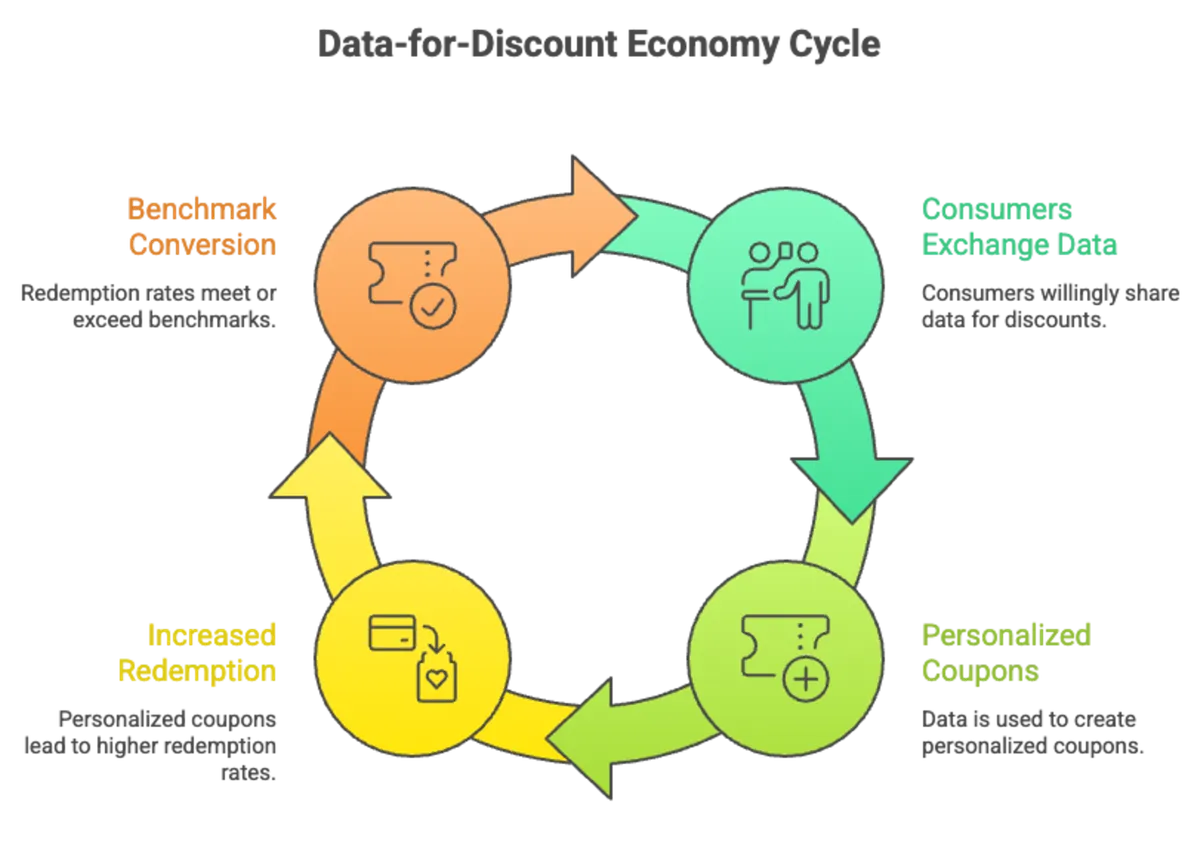
Coupons are competitive leverage. They are also data acquisition engines. Around 85% of consumers report being willing to exchange personal data — email, preferences, behavior tracking — in exchange for discounts [4][13]. This fuels personalization systems. Targeted, personalized coupons achieve a 91% higher redemption rate compared to generic mass offers, and can lead to a 5-8x higher ROI on marketing spend[14].
Discount → Data → Personalization → Higher Redemption → Repeat Purchase.
The loop compounds.
Industry Intensity: Where Coupons Matter Most
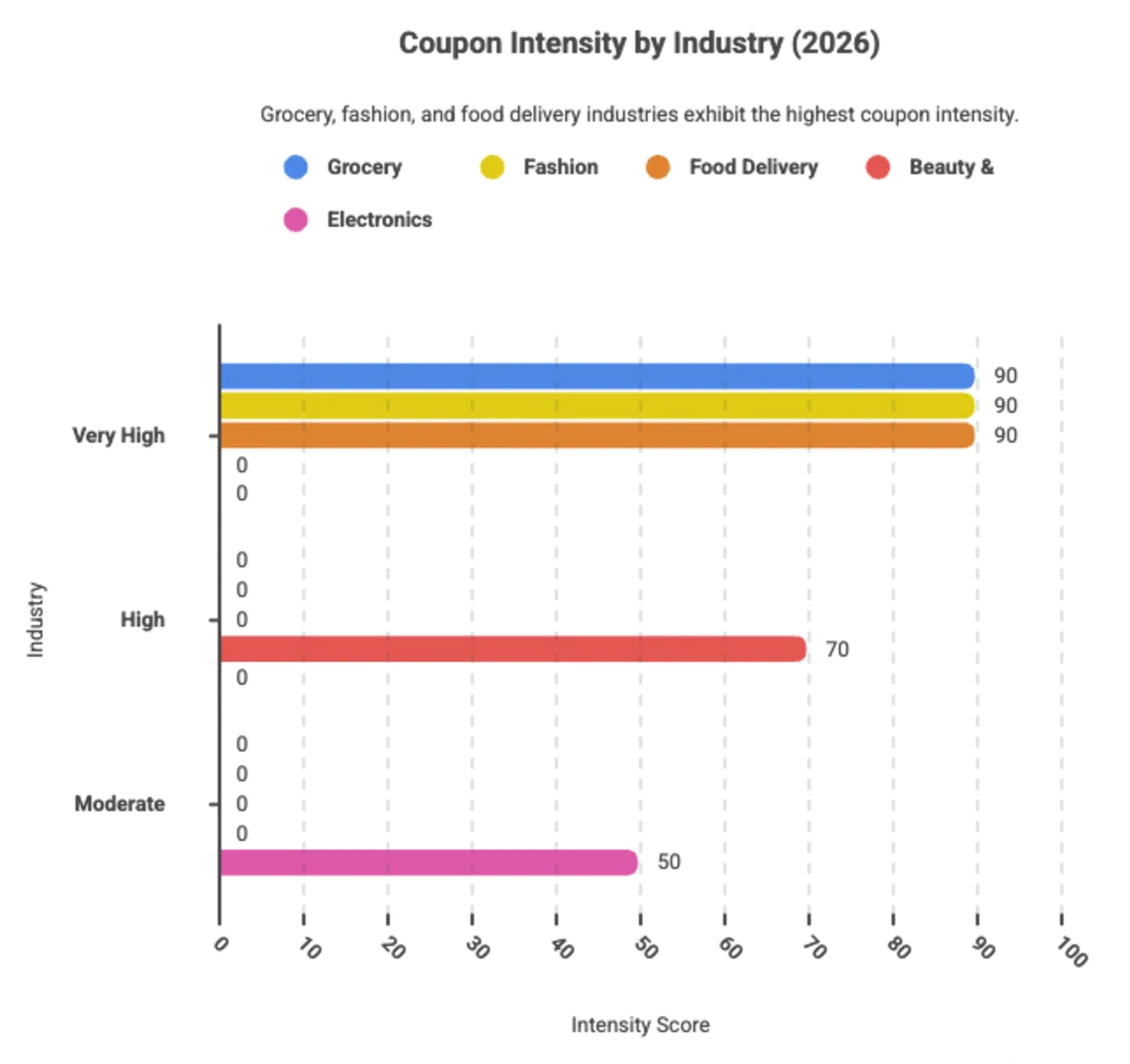
Coupons are not evenly distributed across sectors. Some industries rely on them as oxygen. Others deploy them selectively. Understanding this intensity map is critical for strategy.
Grocery & Household Essentials
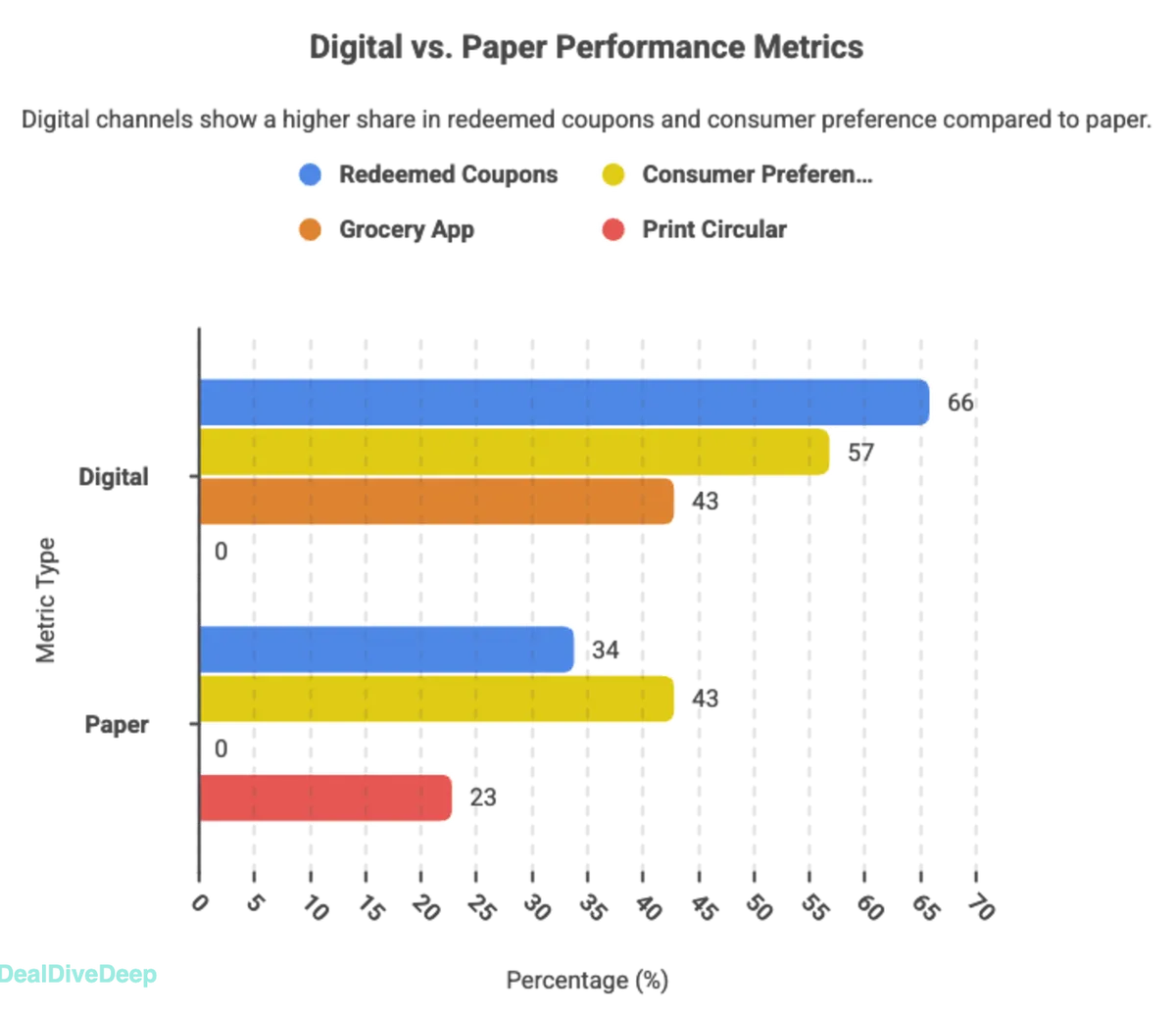
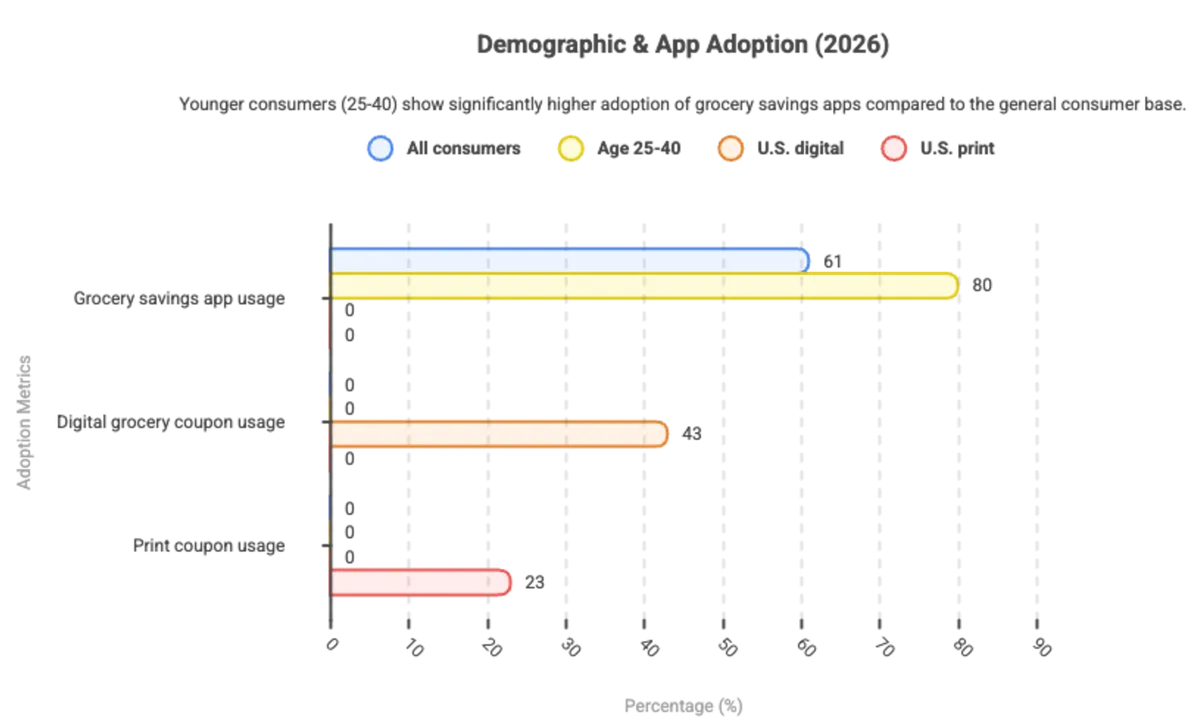
Grocery has become one of the most coupon-driven verticals in digital commerce. Digital coupon usage in grocery stores surged between 2023 and 2025. In the U.S., roughly 43% of grocery shoppers redeem digital coupons via apps, compared to 23% who still use paper coupons [8].
Additionally, approximately 61% of consumers use savings apps for grocery shopping, with usage climbing to nearly 80% among shoppers aged 25–40 [8]. Grocery coupons don’t simply increase basket size. They influence store choice. Shoppers increasingly select retailers based on loyalty app discounts and digital offers. Coupon visibility is now part of competitive positioning.
Fashion & Apparel
Fashion remains one of the most aggressive coupon verticals.
Promo codes dominate seasonal transitions, inventory clearance cycles, and influencer-led marketing campaigns [3]. In emerging markets such as Brazil, fashion consistently ranks among the top coupon redemption categories.
Fashion coupons serve multiple purposes:
- Clearing end-of-season inventory.
- Driving first-time purchases.
- Competing during promotional peaks like Black Friday.
In fashion, coupon intensity is structural — not occasional.
Food Delivery & Restaurants
Few sectors use coupons as strategically as food delivery platforms. Flash codes, influencer-linked discounts, geo-targeted offers [3] — these are market-share weapons. Coupons in food delivery often drive:
- First-order trials.
- Platform switching.
- New geographic expansion.
Because switching costs are low, discounts directly influence market distribution.
Beauty, Health & Personal Care
In beauty and personal care, coupons function as subscription accelerators. Initial discounts are used to acquire customers into recurring auto-ship models. Bundled promotions encourage higher basket value. Personalized offers strengthen loyalty. Here, the coupon strategy blends acquisition with lifetime-value optimization.
Electronics & High-Ticket Retail
Electronics deploy coupons differently. The frequency may be lower, but impact events — limited-time promotions, holiday spikes, major sale periods — generate significant bursts of revenue. In high-ticket categories, even modest percentage discounts represent substantial perceived savings. Coupons here act as event amplifiers rather than everyday incentives.
Competitive Implications
Industries with low switching costs, such as grocery, fashion, and food delivery, show the highest coupon aggression.
Categories tied to subscription models, beauty, and wellness use coupons strategically for onboarding and retention.
High-ticket sectors use coupons episodically but powerfully.
This uneven intensity shapes market expectations. Consumers trained in high-discount categories begin to expect similar incentives elsewhere. Coupons do not operate in isolation. They create industry-wide behavioral spillover.
Demographics, Revenue Economics & The Profit Question
Scale explains reach. Behavior explains impact. Demographics explain durability. If coupons were merely tactical, their influence would fluctuate with economic cycles. But in 2026, the data suggests something more permanent: discount behavior is now embedded across age groups, regions, and income levels. The coupon economy is not temporary. It is generational.
The Demographic Normalization of Deal-Seeking
For years, coupons were associated with extreme value shoppers or specific income brackets. That framing no longer holds. In 2026, deal-seeking spans demographics. Mobile-first generations have integrated coupon search into standard buying behavior. Meanwhile, older consumers have increasingly adopted digital formats, particularly through grocery apps and retailer loyalty platforms. In grocery alone:
- Approximately 61% of consumers use savings apps [8].
- Among shoppers aged 25–40, usage climbs to nearly 80% [8].
- Digital grocery coupon usage (43%) significantly exceeds print clipping (23%) [8].
These numbers matter because they show behavioral penetration across income and age tiers. Coupons are not desperation tools. They are optimization tools.
The Always-On Deal-Seeking Mindset
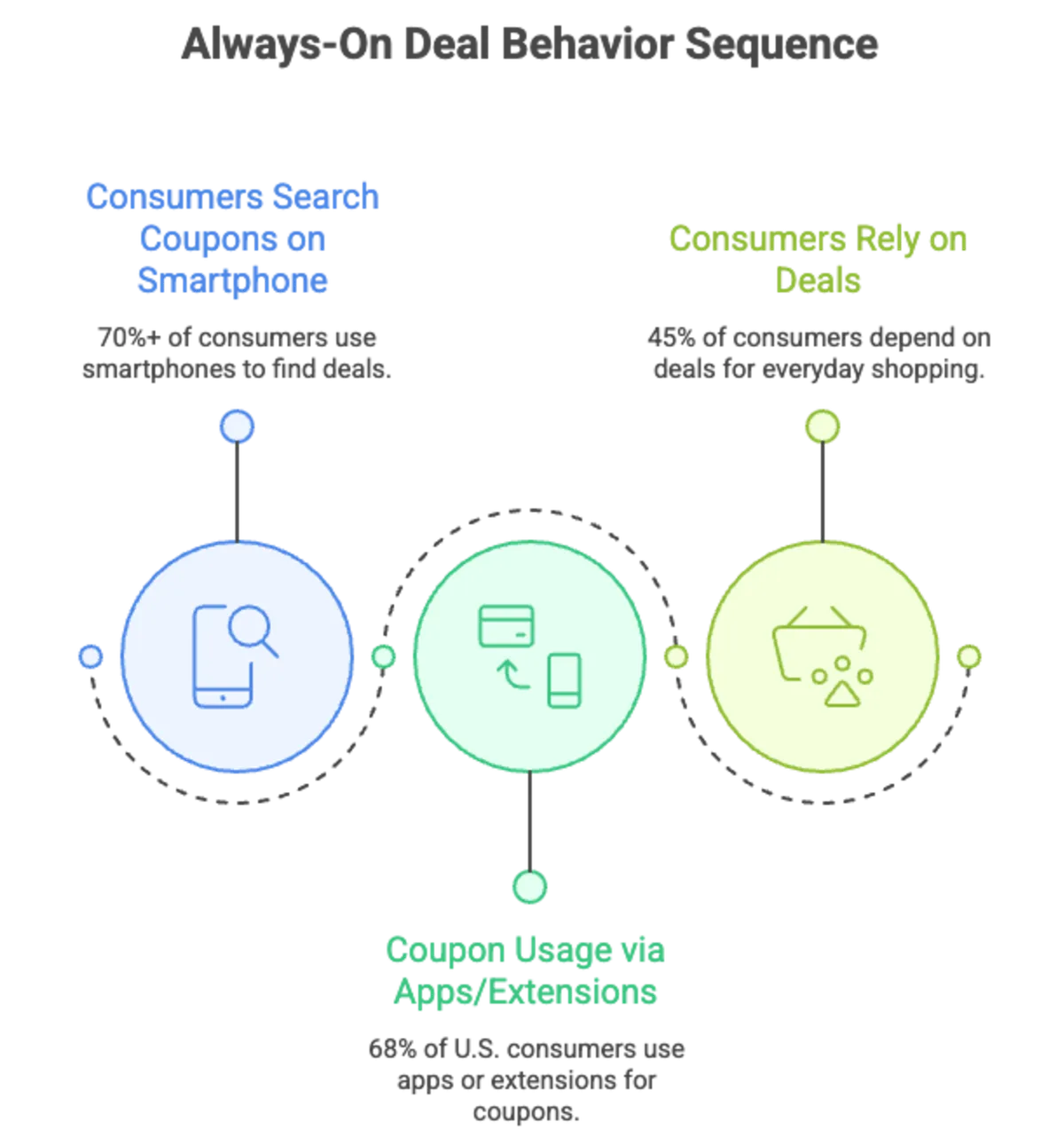
One of the clearest shifts between 2022 and 2026 is psychological. Consumers no longer wait for promotions. They actively hunt them. More than 70% of shoppers search for coupons on smartphones before completing purchases [3]. Approximately 68% of coupon code usage in the U.S. flows through apps and browser extensions [3], many of which automatically test codes at checkout.
This transforms the purchase funnel. The coupon layer is no longer reactive. It is procedural. If a discount is not found, the purchase may pause. If it is found, the transaction accelerates. In some categories, roughly 45% of consumers report relying on deals and promotions as part of everyday shopping [8], not just during high-ticket or seasonal events. Deal-seeking has shifted from occasional to habitual.
Data Exchange: The Currency Behind the Discount
Perhaps the most strategic statistic in the 2026 coupon landscape is this: Approximately 85% of consumers are willing to exchange personal data for better or more frequent discounts [4][13]. Email addresses. Purchase history. Browsing behavior. Preferences. This willingness fuels personalization engines and personalization changes economics.
Targeted coupons can achieve up to 50% higher redemption rates [14] compared to untargeted mass campaigns. This transforms coupons from blunt promotional tools into precision instruments. Discounts become:
- Triggered at abandoned checkout.
- Sent during birthday windows.
- Delivered at loyalty tier thresholds.
- Activated for lapsed customers.
The economics improve because targeting reduces waste.
The Revenue Equation: Do Coupons Erode or Engineer Profit?
The central concern among executives remains margin protection. Do coupons cannibalize full-price sales? The data suggests the answer depends on structure. Well-designed coupon strategies:
- Increase conversion rates (10%+ benchmarks) [11].
- Lift order values (~20% with threshold structures)[11].
- Improve brand trial (86% influence rate) [4][12].
- Reactivate dormant users.
But poorly designed coupon systems:
- Train customers to wait for discounts.
- Overlap promotions.
- Create artificial urgency that erodes trust.
- Compress margins without incremental lift.
The difference lies in measurement. High-performing brands track:
- Incremental revenue (not gross revenue).
- New vs returning customer ratio.
- Average order value lift.
- Lifetime value of coupon-acquired cohorts vs non-coupon cohorts.
Coupons must be measured as investments, not giveaways. When integrated with CRM systems and behavioral triggers, they become profit multipliers. When deployed randomly, they become margin leaks.

Cross-Border & Marketplace Amplification
Coupons are also reshaping global commerce patterns. Cross-border coupon usage grew by approximately 22% in 2024, particularly in digitally mature trade regions [3]. Marketplaces leverage this behavior by:
- Promoting region-specific discount codes.
- Driving flash sales for international buyers.
- Encouraging platform switching via limited-time incentives.
In global commerce, coupons function as arbitrage tools. Consumers compare not only prices, but available promotional leverage. The most competitive price often includes a discount layer.
The 2026 Coupon Strategy Playbook & Building Sustainable Growth Without Margin Collapse
By this stage, the structural reality is undeniable. Coupons are embedded in the buying process. Consumers expect them. Digital formats dominate redemption. Mobile has turned discount search into a procedural step before checkout. And measurable revenue outcomes are directly tied to how intelligently discounts are deployed. But ubiquity introduces danger.
In 2026, the strategic question facing operators is no longer whether coupons work. The evidence confirms that they do. The real question is whether they can be deployed at scale without undermining pricing power, compressing margins, or conditioning customers to wait for perpetual discounts.
Coupons are powerful. But unmanaged power erodes value. The difference between growth acceleration and margin collapse lies in architecture.
Coupons Must Have a Defined Function
One of the most common failures in coupon strategy is randomness. A site-wide 20 percent discount may drive traffic, but if repeated frequently, it resets customer expectations. A weekend flash sale may spike conversion, but if shoppers learn that another one is always coming, urgency disappears.
In mature digital markets, coupons must serve specific lifecycle objectives. Acquisition-focused discounts reduce friction for first-time buyers. Their purpose is not immediate profitability but entry. Conversion-rescue offers intervene at moments of hesitation, abandoned carts, high-value checkouts, and exit intent. Retention coupons reinforce loyalty through milestone rewards, birthday incentives, or tier unlocks. Reactivation campaigns target dormant customers with personalized win-back codes.
When each discount has a defined role, it supports long-term customer value. When it does not, it compresses the margin without strategic return. Structure turns coupons from blunt promotional tools into precision growth instruments.
Discount Depth Is a Strategic Lever
Data consistently shows that discount bands between 20 and 30 percent tend to generate the strongest balance between conversion lift and margin protection. Time-limited offers can produce conversion improvements of roughly 30 percent, but depth must be calibrated carefully.
If a discount is too small, it fails to influence behavior. If it is too large, it reframes the brand’s perceived value. Over time, deep discounts can anchor customers to lower price expectations, making full-price purchases psychologically harder. Threshold-based promotions — such as percentage discounts above a spending minimum — often outperform flat discounts in profitability terms. They increase average order value, sometimes by around 20 percent, by encouraging shoppers to optimize their basket size.
The strategic insight is subtle but critical: a well-designed coupon should increase the size of the purchase more than it decreases the price. That is revenue engineering. Not discounting.
Urgency Must Be Credible
Scarcity and time pressure remain effective conversion drivers. Countdown timers, flash codes, and limited-time campaigns reliably move customers across decision thresholds. But overuse erodes trust.
When urgency becomes constant, consumers stop responding. The phrase “last chance” loses meaning when it appears every weekend. In an environment saturated with promotional messaging, credibility becomes a differentiator. The most effective brands reserve urgency for moments that justify it: seasonal transitions, product launches, inventory resets, holiday cycles, or culturally relevant purchasing windows such as paydays. Event-based promotions feel authentic because they are anchored in real context. Urgency must feel exceptional, not permanent. Otherwise, its power dissolves.
User Experience Determines Redemption
The most compelling discount will fail if redemption friction is high. With more than 70 percent of shoppers searching for coupons on smartphones, mobile optimization is not optional it is decisive. High-performing e-commerce platforms increasingly integrate discount discovery directly into the user interface. Available codes are surfaced automatically for logged-in users. One-click application replaces manual entry. Loyalty rewards are applied seamlessly without forcing customers to hunt for fields or test codes.
Strategic placement alone can significantly increase usage rates. Minor user experience refinements, reducing friction at checkout, and making offers visible at decision points, can generate measurable performance improvements. Coupons operate at the psychological layer. But user experience is the execution layer. When the two align, redemption accelerates.
Measure Incremental Impact, Not Redemption Volume
A coupon campaign boasting high redemption rates may appear successful on the surface. But redemption alone is not proof of incremental revenue. The central question is counterfactual: would the purchase have occurred without the discount?
Sophisticated operators measure incremental revenue uplift, not gross revenue. They analyze profit per campaign rather than top-line sales spikes. They segment new versus returning customers. They examine changes in average order value. Most importantly, they compare the lifetime value of coupon-acquired cohorts against full-price cohorts. If discounted customers churn quickly or exhibit weaker retention, the short-term gain may mask long-term erosion. If targeted offers increase purchase frequency and customer lifetime value, the discount becomes an investment rather than a cost. Coupons must be evaluated as strategic growth assets, not promotional giveaways.
Protecting Brand Equity in a Discount-Heavy Market
Digital couponing in 2026 is aggressive. That aggression creates opportunity — and risk. Premium brands in particular must navigate carefully. Value perception is as important as price. Constant markdowns signal instability. Structured, selective incentives signal generosity.
Brands preserving equity often restrict discounts to member-only environments, deploy time-gated loyalty rewards, favor personalized offers over public codes, or bundle value instead of cutting visible prices. Event-based promotions maintain excitement without diluting positioning.
Coupons should enhance brand narrative, not undermine it. A well-positioned offer communicates confidence. A permanent discount communicates fragility. The distinction shapes long-term brand power.
Marketplace and Cross-Border Complexity
With cross-border coupon usage rising sharply in recent years, marketplaces have evolved into promotional battlegrounds. International buyers compare not only base pricing but discount layers, regional codes, and currency-sensitive thresholds.
Brands operating within marketplace ecosystems must consider region-specific codes, geo-targeted campaign windows, and strategic flash events designed to improve algorithmic visibility. Discount architecture now intersects with search ranking, traffic allocation, and platform economics. In global commerce, coupons influence not just purchase behavior but discoverability. That is a new layer of strategic complexity.
The 2026 Coupon Maturity Model
At this stage, companies tend to fall into one of three categories. The first group deploys coupons tactically — broad site-wide codes, reactive promotions, short-term traffic spikes. They experience margin compression and inconsistent performance.
The second group structures campaigns by lifecycle stage, tests threshold strategies, and tracks incremental lift. Their approach is more disciplined, but still evolving. The third group operates as strategic coupon architects. They integrate CRM triggers, balance urgency with trust, model profit impact across customer cohorts, and protect brand equity while optimizing lifetime value.
Long-term advantage belongs to the third category. Coupons are no longer just promotional levers. They are elements of operating strategy.
Conclusion: Coupons as Competitive Infrastructure
In 2026, coupons are neither optional nor simplistic. Nearly nine in ten shoppers use them. Hundreds of millions are redeemed annually [1][2]. Digital formats dominate performance. Mobile embeds discount search into purchase behavior. Personalization can increase redemption rates by up to 50 percent. Consumers willingly exchange data for value.
Coupons now shape acquisition, conversion, retention, and cross-border competitiveness. But the difference between growth and erosion lies in design. Discounts can expand basket size, accelerate brand trial, improve retention, and increase lifetime value. Or they can compress margins, train discount dependency, and weaken brand positioning. The dividing line is strategic intent.
The most successful e-commerce operators in 2026 do not debate whether coupons work. They ask a sharper question:
Are our coupons engineered for profit — or simply deployed for traffic?
That question defines the next era of digital commerce.
Data Resources
- Insider Intelligence / eMarketer, "Digital Coupon Users and Adoption Penetration," 2025-2026.
- Valassis / Vericast, "Consumer Intel Report: The Deal-Seeking Mindset," 2025.
- RetailMeNot / Ziff Davis Commerce, "E-commerce Checkout Behavior and Discount Dependency," 2025.
- Zebra Technologies / Juniper Research, "Mobile Barcode and Digital Coupon Redemption Metrics," 2024.
- InternetRetailing / savi, "Shopper Behaviour: How Mobile Promotions Transform Brand Loyalty," 2025.
- Valassis, "The Impact of Coupons on Brand Trial and Competitive Switching," 2024.
- Shopify Plus Enterprise Data, "The State of E-commerce Promotions and Consumer Data Exchange," 2025.


